
Potential energy diagram with and without a catalyst
An example figure from the Potential Energy Diagram generator.
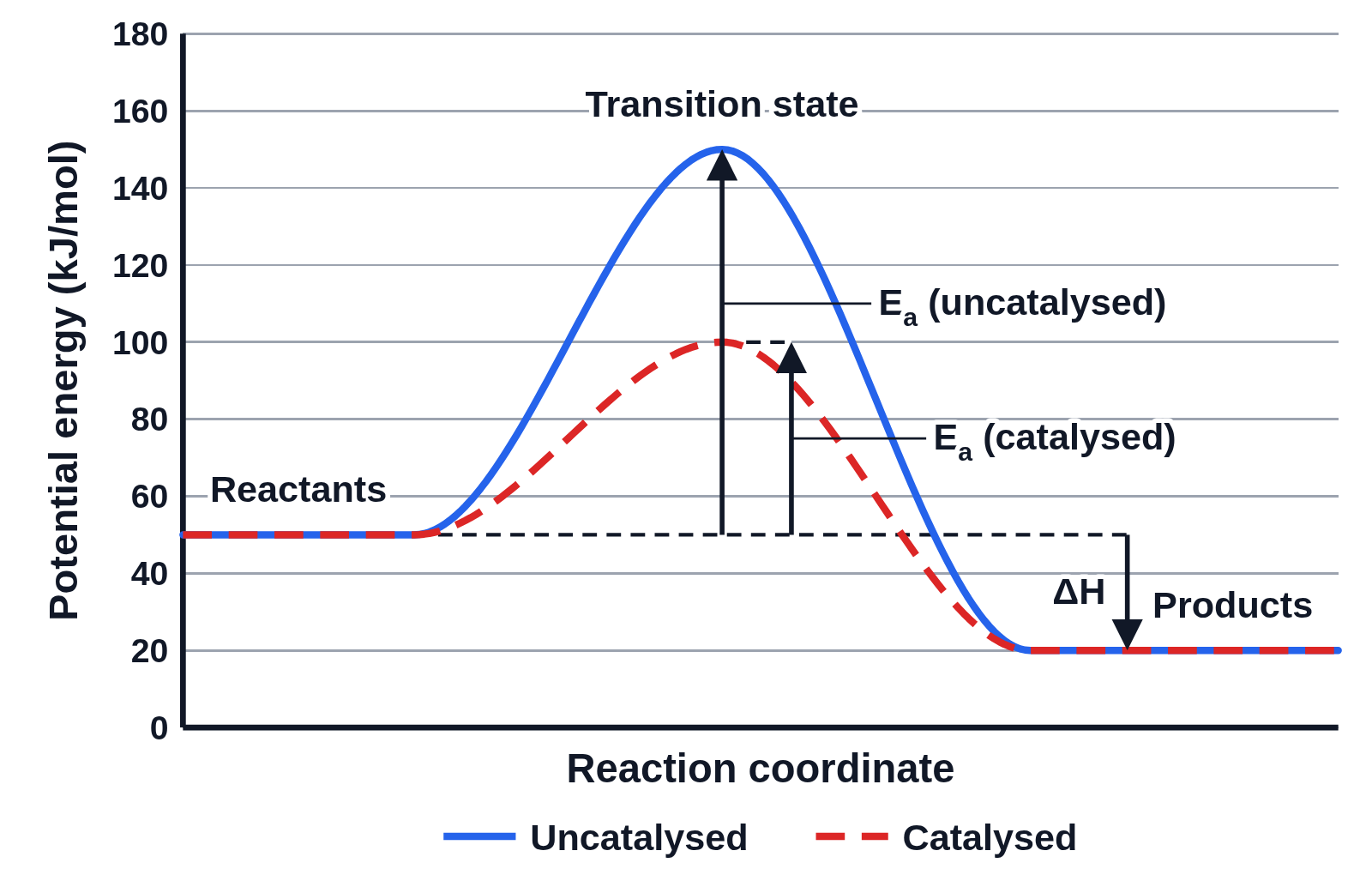
Editing opens it in Potential Energy Diagram with these settings, to change anything and copy or download your own.
Answer key
- ΔH = −30 kJ/mol: exothermic
- Eₐ (forward) = 100 kJ/mol
- Eₐ (reverse) = 130 kJ/mol
- Eₐ (catalysed) = 50 kJ/mol forward, 80 kJ/mol reverse: both 50 kJ/mol lower than uncatalysed; ΔH is the same
Free to use in your tests, worksheets, slides or anything else, no credit needed. Public domain under CC0 1.0. How to reuse our figures
More Potential Energy Diagram examples
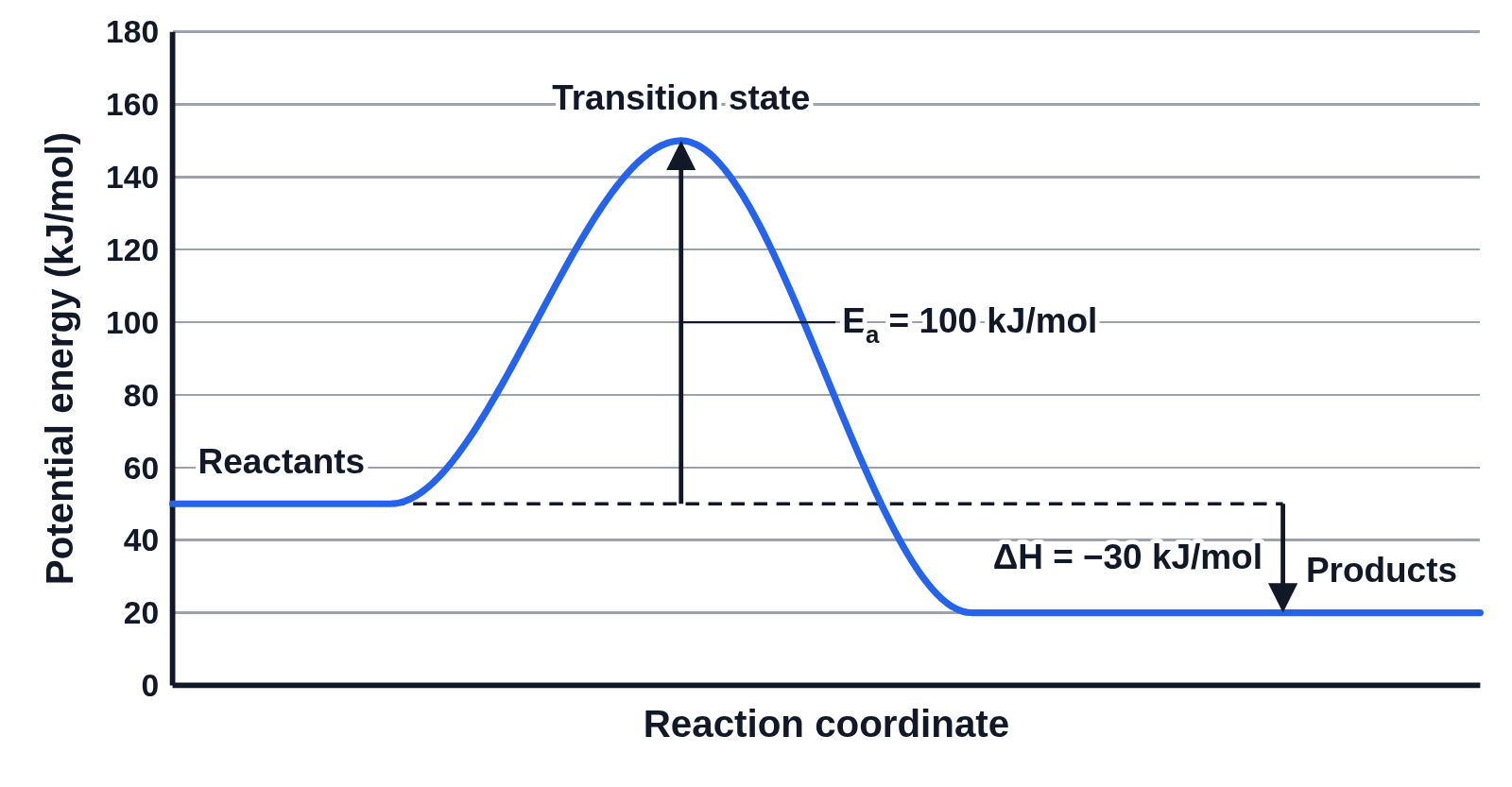 Potential energy diagram of an exothermic reaction
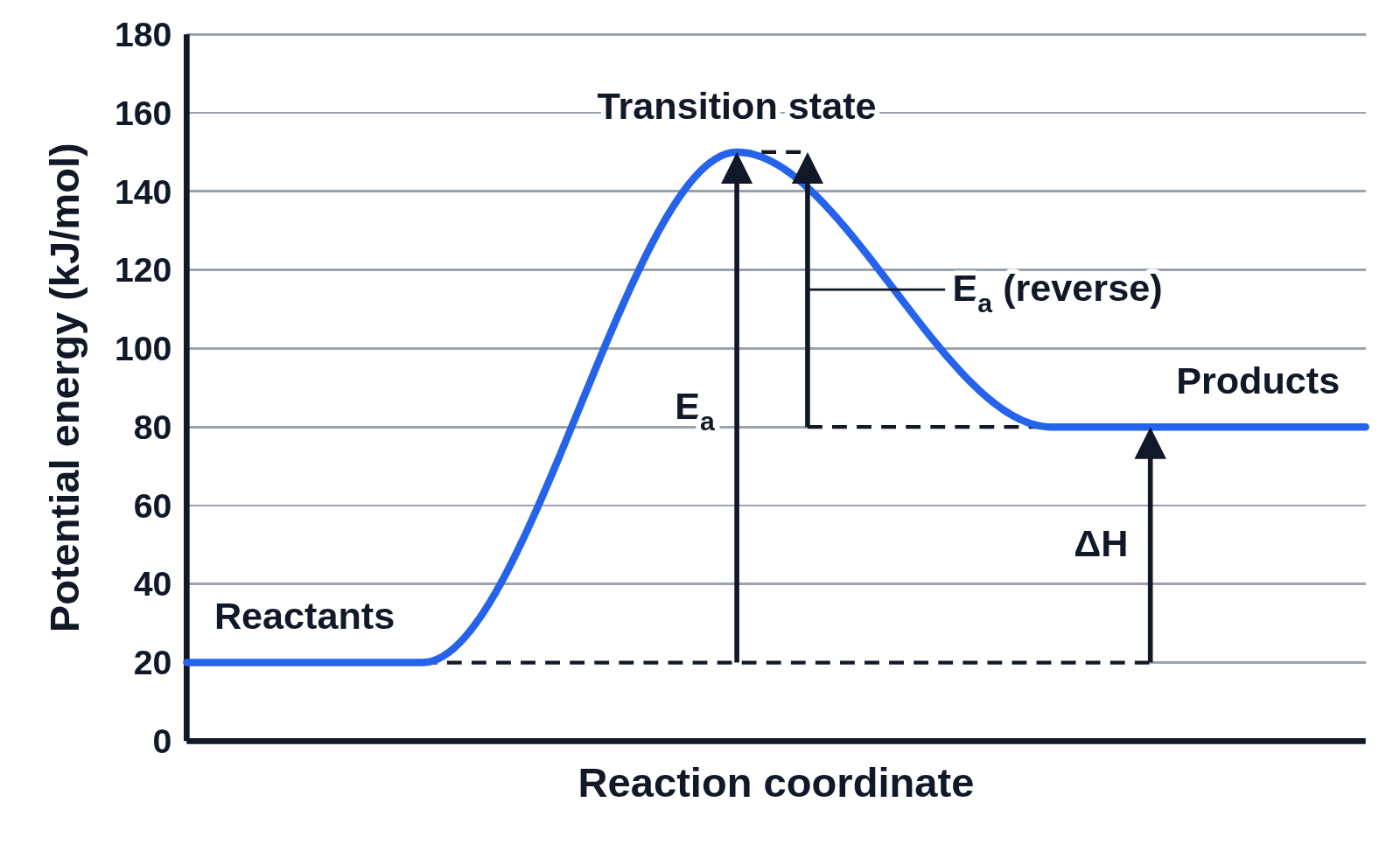 Potential energy diagram of an endothermic reaction
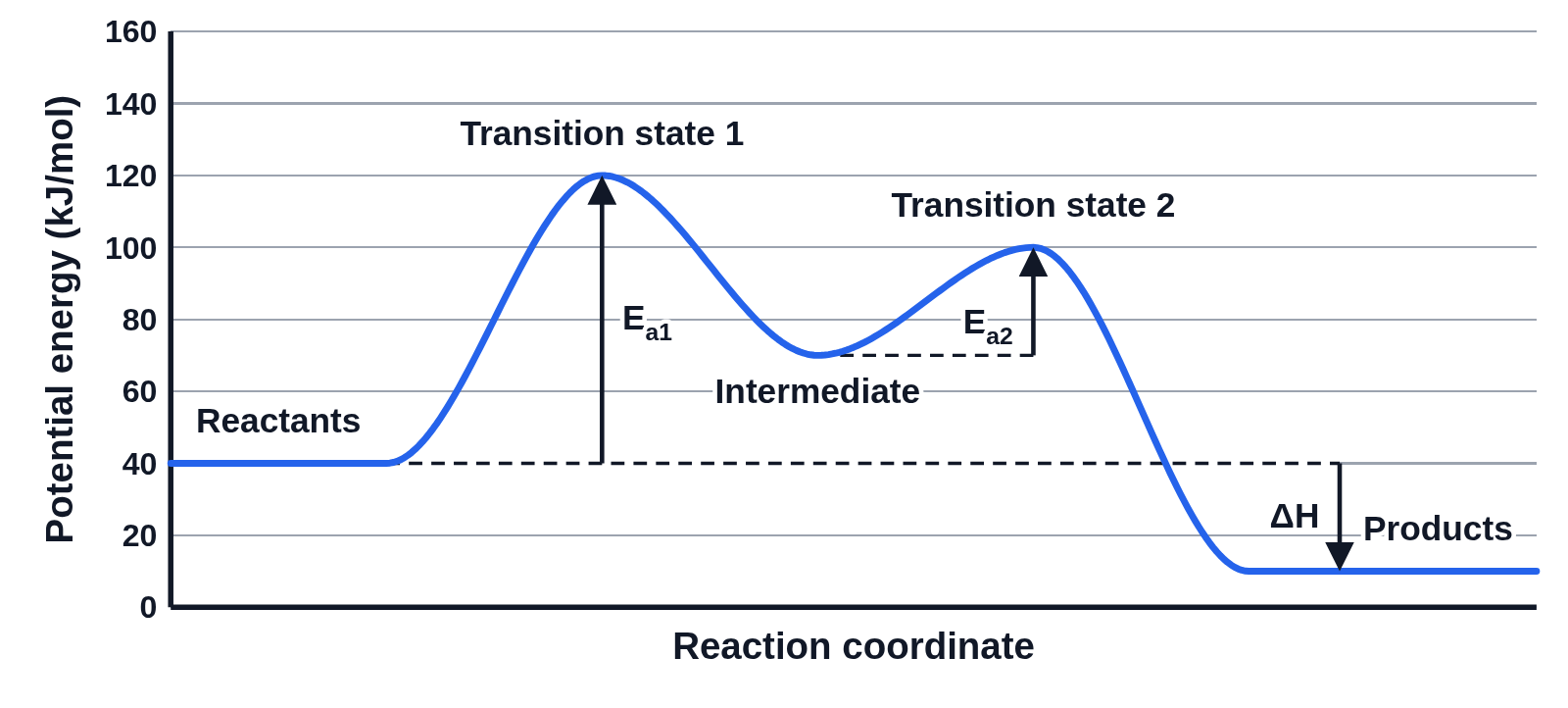 Two-step reaction energy profile with an intermediate
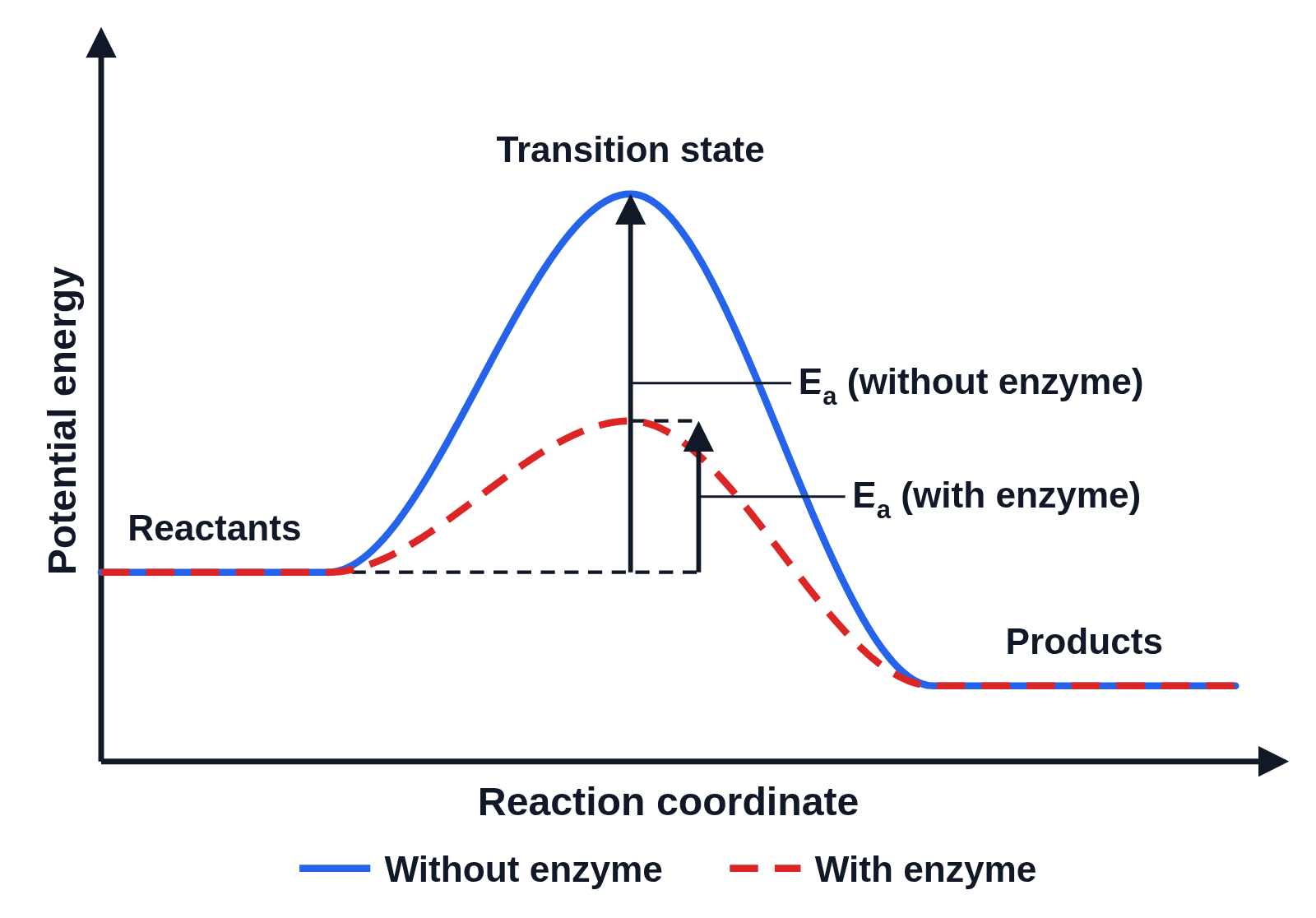 Activation energy with and without an enzyme
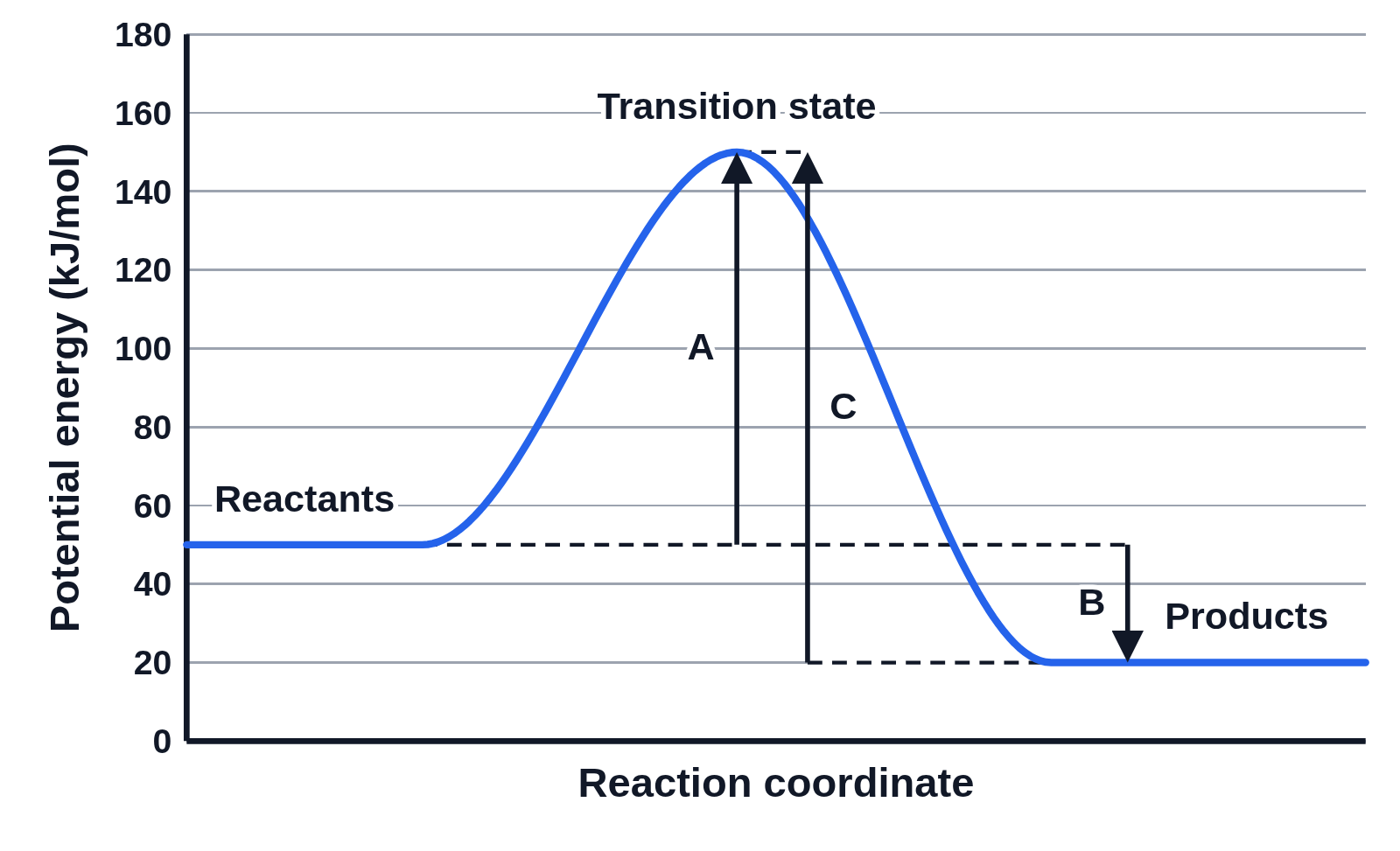 Potential energy diagram worksheet: which arrow shows ΔH?
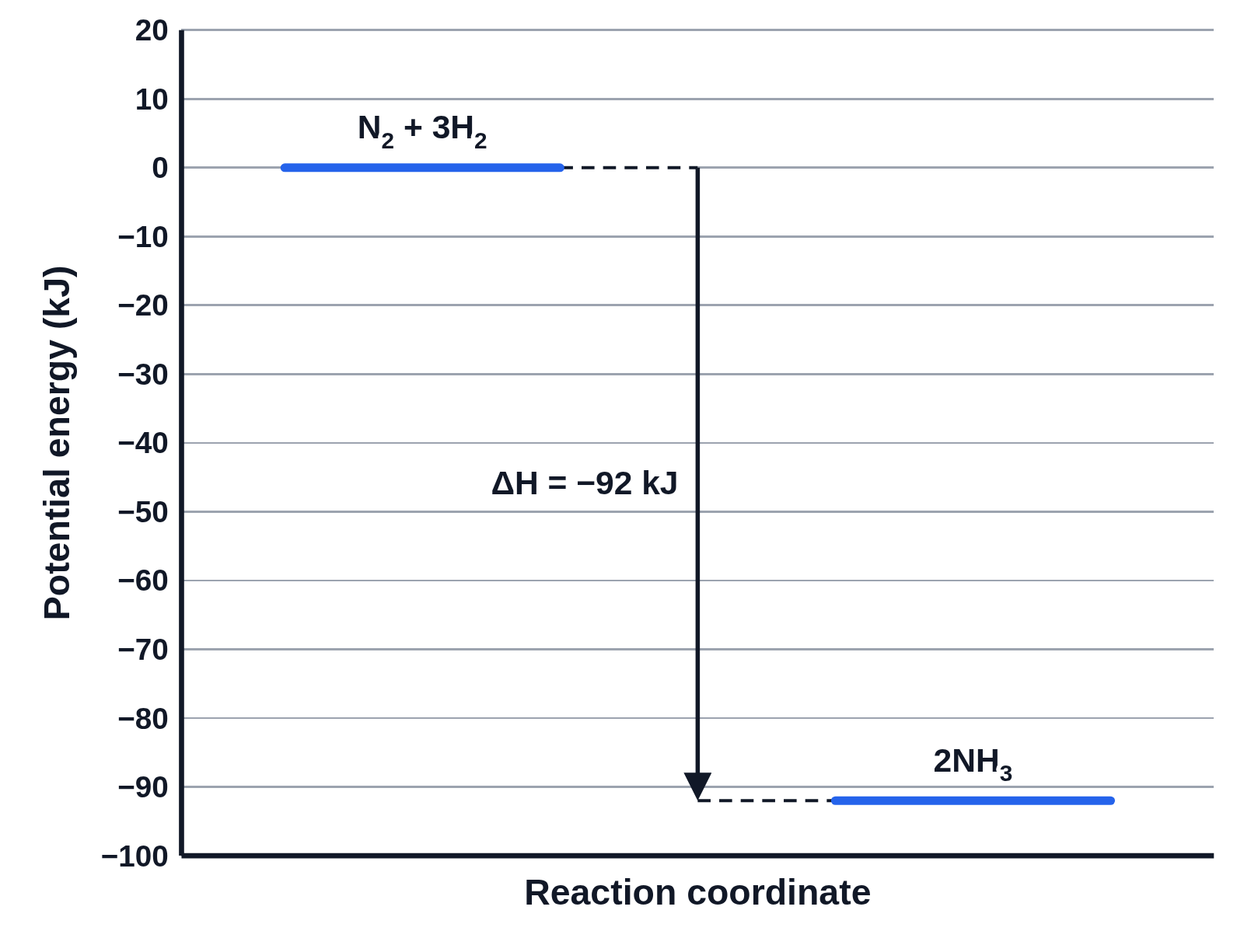 Enthalpy level diagram for the Haber process